
From the 11th to the 14th of December, members of EJP met in Brussels for EJP Lab #2, a gathering of several days of advocacy and internal network development.
The first day of the gathering began at Place du Luxembourg, where EJP coordinator Gabi Kaplan spoke on the harm of the widespread use of the IHRA “working definition of antisemitism” across Europe at the weekly rally of EU Staff for Peace. She emphasized the need for Palestinians in Europe to be able to speak about their oppression without being criminalized for it, and highlighted the systemic exclusion of Jewish stakeholders in policy making processes regarding combatting antisemitism and fostering Jewish life at the EU level. This exclusion has lead to misguided anti-antisemitism policies, based on the IHRA, that harm marginalised communities and feed antisemitic narratives connecting all Jews to the State of Israel. “When a definition of antisemitism is routinely used to silence anti-racist advocacy, then it is the definition, not the advocates, that must be re-examined”, Kaplan concluded.
After the rally, EJP’s nine delegates participated in a round-table discussion in the Parliament, hosted by MEPs Marc Botenga (The Left, Belgium) and Hana Jaloul (S&D, Spain). The delegates shared their lived experiences as activists working at the intersection of fighting against rising antisemitism in Europe and against the State of Israel’s genocide and apartheid in Palestine.
Georgia Gerike of Nahlieli (Finland) highlighted the hypocrisy governments which use racist stereotyping against Muslims and Black people for political gain, while simultaneously accusing pro-Palestine activists of all backgrounds of antisemitism. “The selective condemnation of racism shields the nationalist right while demonising anti-racist and pro-Palestinian voices, reflecting a deep institutional bias that harms all racialised groups”, said Gerike.
“when a definition of antisemitism is routinely used to silence anti-racist advocacy, then it is the definition, not the advocates, that must be re-examined” – Gabi Kaplan, EJP coordinator
Béatrice Orès of Union Juive Française pour la Paix (France) shared about their collective’s work to raise funds to support farm workers in Gaza, an ongoing project since 2016, which has continued through the genocide to provide life-saving support. She also shared about UJFP’s participation in the legal proceedings against French-Israelis who are accused of complicity in genocide under French law for blockading humanitarian aid trucks from entering Gaza in 2024.
Joana Cavaco of Erev Rav (Netherlands) highlighted the painful experience of exclusion from pro-Israel Jewish institutions, the need for real belonging, and the need for policies and practices that foster Jewish life without political gatekeeping.
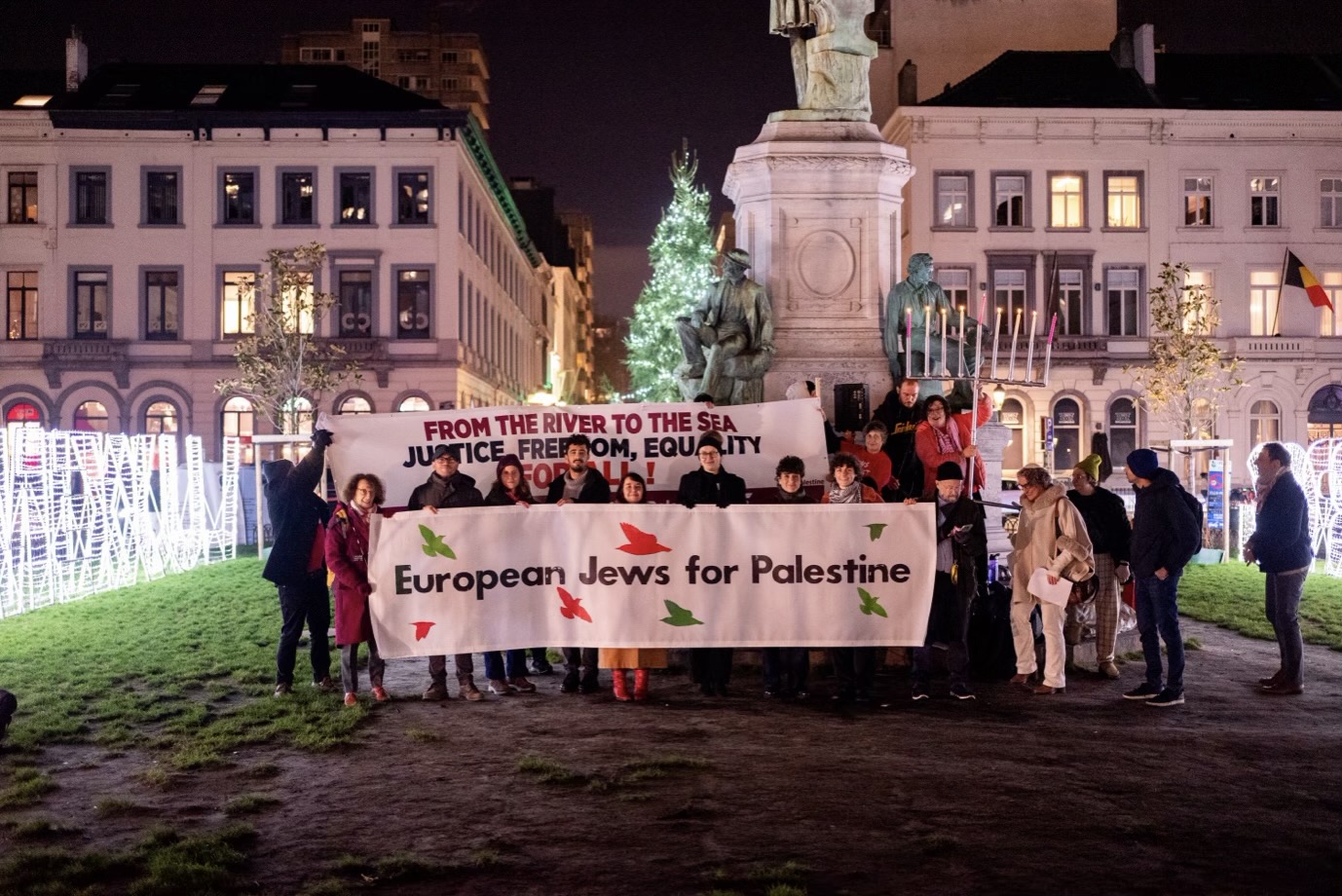
In the evening, the delegates exited the parliament and gathered again at Place du Luxembourg, this time with a 1.5 meter Channukiah in tow, for a pre-Chanukah candle lighting ceremony, led by Rabbi Ilana Sumka. Together with Brussels-based group Union des Progressistes Juifs de Belgique (UPJB) and a crowd of supporters Sumka led the audience in song, and invited audience members up to light the Channukiah and share their personal dedications to the fight for justice and liberation for all.
The following two days were spent in intensive internal meetings, which focused on the network’s strategic development.
“The selective condemnation of racism shields the nationalist right while demonizing anti-racist and pro-Palestinian voices, reflecting a deep institutional bias that harms all racialized groups” – Georgia Gerike, Nahlieli